Solving Water Pressure Issues: Causes, Fixes & When to Call a Pro
Ever run a shower and felt like you’re standing under a drizzling cloud? Or maybe you’ve turned on the tap only to have water blast out like a fire hose? Water pressure problems sneak up at the worst times—late-night laundry, weekend dinners, or just when you’re about to rinse off after a long day. You’re not alone. At The Four Plumbing, we’ve seen it all, from tiny trickles to burst pipes flooding a basement at 2 a.m.
Let’s walk through what causes water pressure issues, how you can check them yourself, and when it’s time to call in emergency plumbing pros. Because sometimes, a quick fix is all you need. Other times, it’s a race against the clock.
Common Causes of Water Pressure Problems 🚰
Water pressure isn’t magic. It’s the result of pumps, pipes, valves, and time. When it fails, something’s off in the system. Here’s what could be happening:
- Clogged Pipes: Mineral buildup, rust, or debris can choke water flow, especially in older homes or after repairs.
- Leaky Pipes: Even a small leak can turn a strong flow into a weak dribble. Watch for damp spots, puddles, or water stains.
- Faulty Pressure Regulator: This device keeps pressure steady. When it fails, pressure can swing high or low fast.
- Municipal Supply Issues: Sometimes, the problem starts outside your property—city work, main breaks, or fire hydrant use can cause sudden drops.
- Valve Problems: The main shut-off or water meter valve might be partially closed or malfunctioning.
- Shared Supply Lines: In multi-unit buildings or commercial properties, demand spikes can lower pressure in your space.
- Water Heater Troubles: Sediment in the tank, broken valves, or a failing unit may cause hot water pressure issues.
Think of your plumbing like a set of arteries. Blockages, leaks, or pressure changes anywhere can throw the whole system off balance.
DIY Pressure Checks & Quick Safety Checklist
Before you call for backup, there are a few safe checks you can do yourself. But safety comes first:
Quick Safety Checklist:
- Turn off electrical appliances near any leaks or damp areas.
- If you spot flooding or major leaks, shut off the main water valve immediately.
- Never open plumbing fixtures or shut-off valves you’re unfamiliar with—call a pro if unsure.
- Wear gloves and eye protection if you’re checking pipes or under sinks.
DIY Water Pressure Checks:
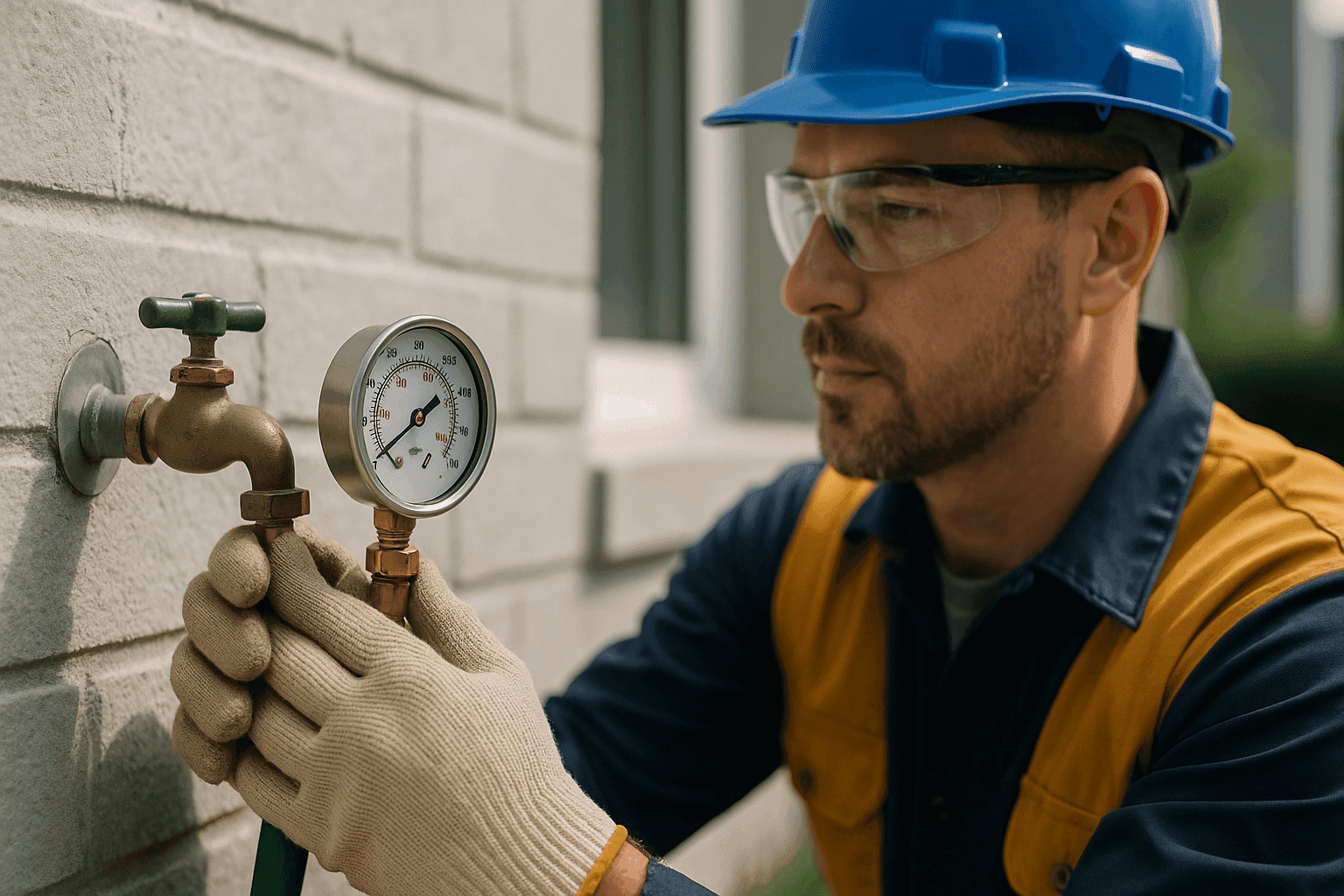
- Use a Pressure Gauge: Pick up a simple gauge at a hardware store. Screw it onto an outdoor spigot or laundry faucet. Normal residential pressure is 40–80 psi (pounds per square inch).
- Check Multiple Fixtures: Is the issue everywhere or just in one spot? If only one faucet is affected, it might be a local clog or faulty aerator.
- Test Hot vs. Cold: Low pressure on hot water only? That points to the water heater or a nearby valve.
- Look for Leaks: Walk around. Listen for hissing, check for wet drywall, and look for standing water. Even small leaks can sap pressure.
If you’re unsure or spot anything unusual, it’s safest to stop and call for help.
Common Fixes & System Upgrades
Some pressure problems are easy to fix. Others need a pro’s touch. Here’s what might solve the issue:
Homeowner Fixes
- Clean Faucet Aerators: Unscrew, rinse, and reattach. Gunk can block flow.
- Adjust Pressure Regulator: If you’re comfortable, a clockwise turn increases pressure. Only adjust a working, accessible regulator.
- Replace Showerheads: Clogged heads can be swapped out in minutes.
- Check for Kinks: Make sure flexible hoses under sinks or behind toilets aren’t bent or pinched.
Professional Solutions
- Pipe Repair or Repiping: For old, corroded, or leaky pipes, replacement is often safer and more reliable.
- Pressure Regulator Replacement: A plumber can test, repair, or replace faulty regulators.
- Leak Detection: Pros use acoustic tools, infrared, and tracer gases to find hidden leaks without tearing up your property.
- Water Filtration Upgrades: Sediment or whole-house filters can protect pipes and keep pressure steady.
- Booster Pumps: For low-pressure homes or upper floors, a booster pump can make a night-and-day difference.
- Backflow Prevention: Required in many areas, backflow devices keep your water safe and your system up to code.
Meter Types & Code Compliance
There are two main types of water meters found in homes and businesses:
- Displacement Meters: Most common in homes. They measure water by how much moves through a chamber—great for slower, steady flows.
- Velocity Meters: Used in larger or commercial properties. These measure how fast water moves through the pipe.
Both meter types must be accessible and installed according to local plumbing codes. The Uniform Plumbing Code (UPC) and International Plumbing Code (IPC) set guidelines on pressure limits, backflow prevention, and device placement. Always ensure any upgrades or repairs meet these standards.
Commercial System Considerations 🏢
For businesses, water pressure isn’t just comfort—it’s compliance and continuity.
- Multiple Floors: Pressure drops are common on upper levels. Booster systems and balanced pipe sizes matter.
- Fire Suppression: Sprinkler systems have strict minimum pressure requirements.
- Code Compliance: Commercial codes (OSHA, IPC) often require annual backflow testing and certified repairs.
- Shared Lines: Restaurants, offices, and apartment buildings may share main feeds. Demand spikes can cause big swings in pressure.
- Sewer Line Inspection: A slow drain or gurgling can signal pressure or flow problems in the sewer system, not just supply lines.
If your business is losing pressure, don’t wait. A small glitch can shut down operations or trigger code violations.
DIY vs. Call a Pro
How do you know when to roll up your sleeves—or reach for the phone? Here’s a quick guide:
DIY if:
- The problem is isolated to one faucet or shower.
- Aerators or showerheads are visibly clogged.
- You’re comfortable using a pressure gauge and making small adjustments.
Call a Pro if:
- Pressure is low or high throughout the whole property.
- You suspect a hidden leak or see water damage.
- Pipes bang, vibrate, or make odd noises.
- The main shut-off valve or pressure regulator looks damaged.
- You run a business or have code compliance concerns.
Emergency plumbing is exactly that—urgent. If you’re facing a sudden loss of pressure, visible leaks, or flooding, get help now.
What Pros Do On Arrival
When The Four Plumbing team arrives, here’s what you can expect:
- System Assessment: We’ll check main valves, pressure regulators, and visible pipes.
- Pressure Testing: Using calibrated gauges, we test at multiple locations—inside and out.
- Leak Detection: Advanced tools help us listen for leaks inside walls or below slabs.
- Meter & Valve Check: We verify your water meter and shut-off valves are working as they should.
- Code Compliance Review: All repairs and upgrades are done to current code (UPC/IPC), with documentation for commercial clients.
- Clear Explanation: We walk you through the findings and options—no jargon, no surprises.
Prevention & Maintenance
A little attention goes a long way. Here’s how to keep water pressure problems at bay:
- Annual Plumbing Inspections: Catch small issues before they become big headaches.
- Backflow Testing: Required for many businesses, smart for homes with irrigation or fire systems.
- Flush Water Heaters: Remove sediment every year to keep hot water flowing strong.
- Replace Old Pipes: Galvanized steel and old copper can rust from the inside out.
- Install Pressure Regulators: Especially in areas with high municipal pressure.
Prevention is like brushing your teeth. A little effort now saves a lot of pain (and money) down the road.
Costs & Time Factors
Every job is different, but here’s what can affect the price and timeline:
- Type of Repair: Replacing an aerator takes minutes. Finding and fixing a slab leak could take a day or more.
- Materials Needed: New pipes, regulators, or pumps add to the cost.
- Property Size: Bigger homes and businesses take longer to inspect and fix.
- Accessibility: Hard-to-reach pipes, crawl spaces, or ceilings add time.
- Emergency Response: After-hours, weekends, or holidays may cost more.
Plan for a professional assessment if your issue is widespread or persistent. Small fixes are usually quick; bigger repairs may take planning.
When It’s an Emergency 🚨
Some water pressure problems just can’t wait:
- Sudden, total loss of water pressure.
- Water pouring from ceilings, walls, or floors.
- Unexplained puddles or flooding.
- Rapidly increasing water bills—often a sign of an underground leak.
- Gas line or boiler issues in combination with pressure changes.
If you’re experiencing any of these, call emergency plumbing right away. Water damage moves fast.
FAQ: Water Pressure Problems
Q: Why does my shower lose pressure when someone uses the sink?
A: It’s usually due to shared supply lines. Older plumbing or undersized pipes can’t keep up with demand.
Q: Is high water pressure bad?
A: Yes. Pressure above 80 psi can damage pipes, fixtures, and appliances. A pressure regulator helps protect your system.
Q: Will water filtration help with pressure?
A: Sometimes. Sediment filters can remove buildup that restricts flow, but if pipes are already clogged, a filter alone won’t solve it.
Q: Can I fix a leaky pipe myself?
A: Temporary fixes like pipe clamps or tape can stop a leak for a short time. Permanent repairs should be handled by a licensed plumber.
Local & Seasonal Considerations
Water pressure can change with the seasons and local conditions:
- Cold Weather: Freezing pipes can restrict or block flow. Insulate exposed lines.
- Construction Nearby: City crews working on mains can cause temporary drops or surges.
- High-Rise Buildings: Pressure boosters are often needed for upper floors.
- Older Neighborhoods: Antiquated pipes are more prone to leaks and buildup.
Always consider your property’s age, layout, and location when diagnosing pressure issues.
Remember: Water pressure problems can be a quick fix—or a serious risk. If in doubt, call The Four Plumbing for emergency plumbing help or Sump Pump Repair near you. We’re ready for anything your pipes throw at us.
Call The Four Plumbing now — or reach us anytime at 888-884-8551 .