Preventing Plumbing Freezes: Essential Winter Tips for Homeowners and Businesses
Winter can be brutal on your plumbing. One cold snap, and suddenly your pipes are more like popsicles than pathways for water. Frozen pipes aren’t just an inconvenience—they can lead to burst lines, expensive repairs, and water damage that lingers long after the thaw.
At The Four Plumbing, we know how quickly a plumbing freeze can turn from a minor annoyance into a full-blown emergency. That’s why we’ve put together this essential winter guide, packed with practical advice to help you stay warm, dry, and worry-free all season long.
Why Pipes Freeze (And Why It Matters)
When temperatures drop, water inside your pipes can freeze and expand. Imagine a soda can left in the freezer—eventually, it bursts. The same thing can happen to your plumbing. Pipes in unheated spaces like basements, attics, and exterior walls are especially at risk.
A single frozen pipe can release hundreds of gallons of water if it bursts, according to the Insurance Institute for Business & Home Safety. That means soaked floors, ruined walls, and a whole lot of stress.
Understanding Why Pipes Freeze
Water expands as it freezes. When this happens inside a pipe, pressure builds up between the ice blockage and the closed faucet. If the pressure gets too high, the pipe can crack or burst. Even a small split can unleash a flood.
Most Vulnerable Areas
- Uninsulated pipes in basements, crawl spaces, and attics
- Pipes running along exterior walls
- Outdoor hose bibs and sprinkler lines
- Under-sink plumbing near outside walls
The Cost of Ignoring the Problem
A burst pipe is more than a plumbing issue—it’s a property emergency. Cleanup, repairs, and water damage restoration can run into the thousands. Acting early is the best way to avoid cold-weather disasters.
Top Strategies to Prevent Plumbing Freezes 🧊
You don’t need to be a plumber to take action. Simple steps now can save you a ton of trouble later.
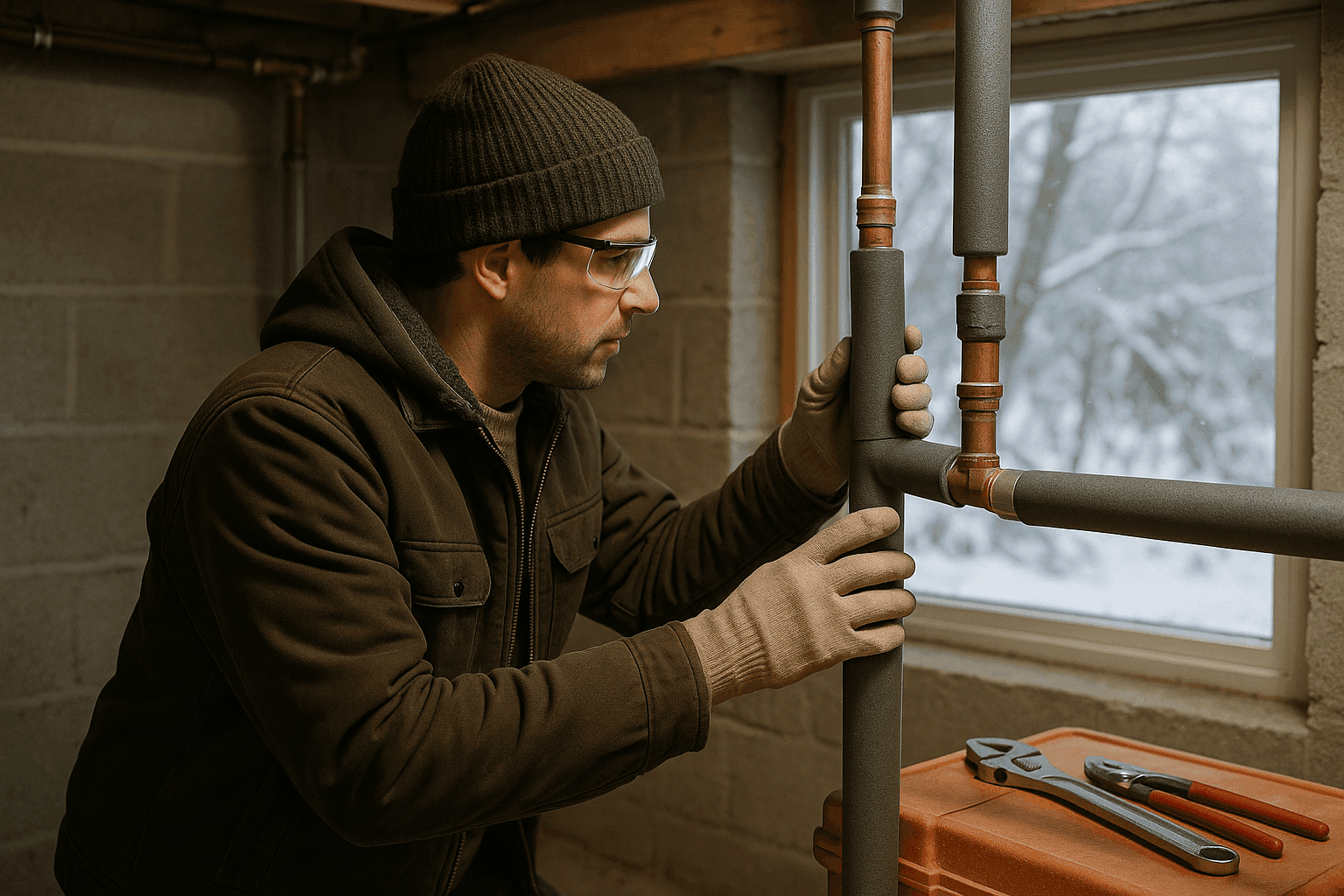
Pipe Insulation Techniques
Think of insulation like a winter coat for your pipes. It keeps the cold out and the warmth in.
- Use foam pipe sleeves or wrap pipes with fiberglass insulation.
- Pay special attention to pipes in unheated areas.
- Don’t forget elbow joints and bends—they’re often overlooked.
According to the International Plumbing Code, all water supply pipes in unconditioned spaces should be insulated for best results.
Maintaining Proper Water Flow
Water moving through pipes is less likely to freeze.
- On especially cold nights, let cold water drip from the faucet served by exposed pipes.
- Keep cabinet doors open under sinks to let warm air circulate around plumbing.
Sealing Entry Points
Cold air loves to sneak in through cracks and gaps.
- Seal holes where pipes enter your home with caulk or expanding foam.
- Check for drafts around windows, doors, and foundation walls.
Using Heating Devices Safely
Space heaters and heat tape can help—but only if used correctly.
- Use UL-listed heat tape for pipes, following manufacturer instructions.
- Never use open flames or propane torches to thaw pipes.
- Keep space heaters away from flammable materials and never leave them unattended.
Quick Winter Plumbing Safety Checklist
- [ ] Insulate exposed pipes in unheated spaces
- [ ] Disconnect garden hoses and drain outdoor faucets
- [ ] Seal gaps around pipes entering the building
- [ ] Set thermostat to at least 55°F, even when away
- [ ] Keep interior doors open for better air circulation
- [ ] Know where your main water shutoff valve is located
Emergency Steps if Pipes Freeze
Sometimes, even the best preparation isn’t enough. If you turn on a faucet and only a trickle comes out, a pipe may be frozen.
Immediate Actions
- Shut off the main water supply if you suspect a burst.
- Open the faucet to relieve pressure.
- Apply gentle heat to the frozen section using a hair dryer, heating pad, or towels soaked in hot water.
- Start thawing from the faucet end and work toward the coldest section.
- Never use open flames or leave heating devices unattended.
If you can’t locate the freeze or restore flow, it’s time to call emergency plumbing services.
DIY vs. When to Call a Professional
Some winter plumbing fixes are safe for handy homeowners. Others need a trained touch.
Good DIY Options
- Insulating pipes
- Sealing drafts
- Letting faucets drip
When to Call The Four Plumbing
- You can’t find the frozen section
- No water at multiple fixtures
- Suspected pipe burst (water stains, pooling, or sudden dampness)
- Frozen pipes inside walls or ceilings
Professional plumbers have specialized tools—like pipe-thawing machines and thermal imaging cameras—that make quick work of tough freezes.
What Pros Do On Arrival
When you call The Four Plumbing for a winter emergency, here’s what you can expect:
- Rapid assessment of your plumbing system
- Use of safe, code-compliant thawing methods (never open flames)
- Inspection for cracks, leaks, or water damage
- Recommendations for repairs or long-term prevention
- Clear communication every step of the way
Our team follows industry safety standards, including guidance from the American Society of Plumbing Engineers and relevant building codes.
Prevention & Maintenance: Staying Ahead of the Freeze ❄️
Early preparation is your best defense. Think of it as putting snow tires on your plumbing.
Seasonal Maintenance Tips
- Schedule an annual plumbing inspection before winter sets in
- Replace old or worn pipe insulation
- Drain and shut off outdoor water lines
- Test sump pumps and backflow prevention devices
- Install smart leak detectors for early warning
Preventative Upgrades
- Consider rerouting exposed pipes to warmer areas
- Upgrade to frost-proof outdoor faucets
- Install water shutoff valves for quick emergency response
Costs & Time Factors
Frozen pipes can hit your wallet hard. The cost depends on the extent of the damage and how quickly you act.
- Minor freeze with no burst: insulation or thawing may take 1–2 hours
- Burst pipe: repairs, water cleanup, and restoration can take several days
- Water damage restoration: the longer water sits, the higher the cost
Acting fast can mean the difference between a quick fix and a major renovation.
When It’s an Emergency
Not all winter plumbing issues require an emergency plumbing call—but some do.
Signs of a True Emergency
- Water is pouring from ceilings, walls, or floors
- No water at all in your home or business
- You hear hissing, banging, or gurgling in pipes
- Visible frost on exposed pipes
- Water stains or swelling in drywall or flooring
If you see any of these, shut off your main water supply and call The Four Plumbing immediately.
Frequently Asked Questions
How can I tell if my pipes are frozen?
If you turn on a faucet and only a trickle comes out, or none at all, a pipe may be frozen. Check exposed pipes for frost or bulges.
Is it safe to thaw pipes myself?
You can try gentle methods like a hair dryer or warm towels. Never use open flames. If in doubt, call a professional.
Should I keep my heat on when I’m away?
Yes. Set your thermostat to at least 55°F to keep pipes above freezing, even if you’re not home.
Are all pipes at risk?
Pipes in unheated spaces and exterior walls are most vulnerable. Insulate or reroute these if possible.
Special Considerations for Businesses
Small businesses face unique risks. A single burst pipe can halt operations and damage valuable equipment or inventory. Consider:
- Regular plumbing inspections before winter
- Training staff on emergency shutoff procedures
- Installing leak detection and automatic shutoff systems
- Keeping a list of emergency contacts handy
Stay Ahead of Winter Plumbing Woes
Don’t let frozen pipes catch you off guard. With a little preparation—and a reliable emergency plumbing team on call—you can keep your property safe, dry, and running smoothly all winter long.
Call The Four Plumbing now — or reach us anytime at 888-884-8551 .